



How to Play
A quick reference for common yaku (winning hands), fu (scoring points), and key terms.
The goal of the game
Mahjong is a race to be the first to complete a winning hand. A standard hand is four sets of three tiles plus one pair — 14 tiles in total.The tiles
There are three number suits (characters, circles, bamboo, each 1–9) plus honor tiles (the four winds and three dragons). Number tiles can form runs; honors are only used in matching sets.Sets and the pair
A set is either a run of three consecutive tiles in one suit (e.g.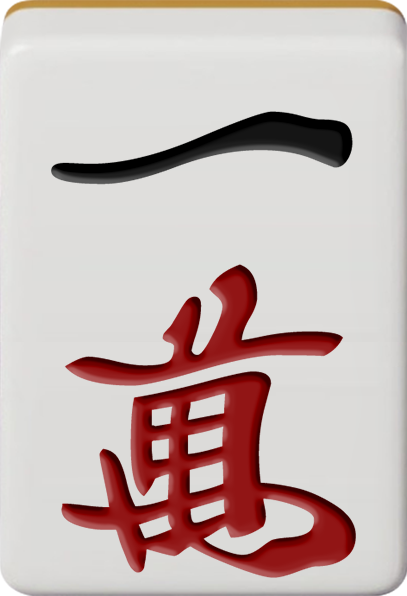
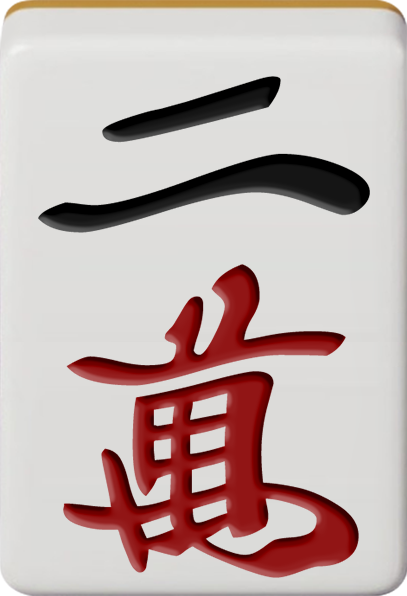
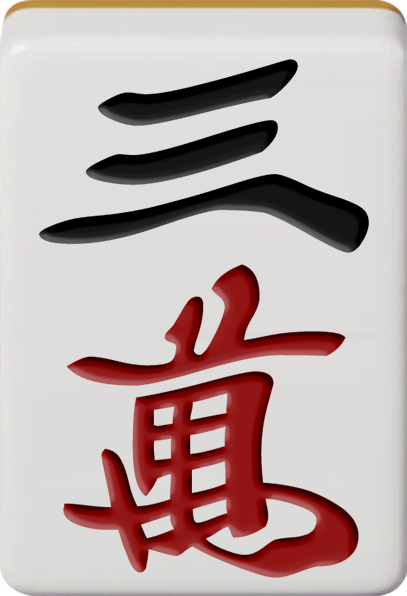 ) or three identical tiles (e.g.
 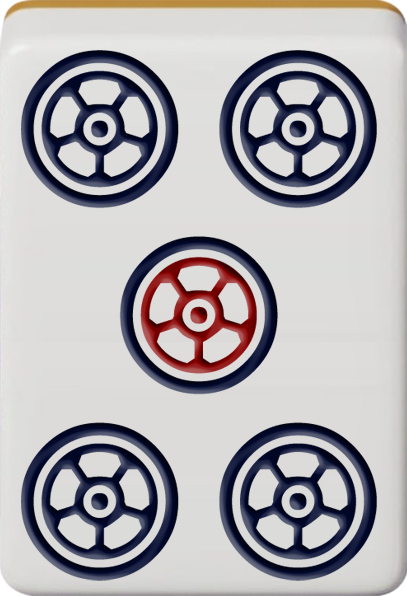 ). The pair is just two identical tiles.
A winning hand
For example 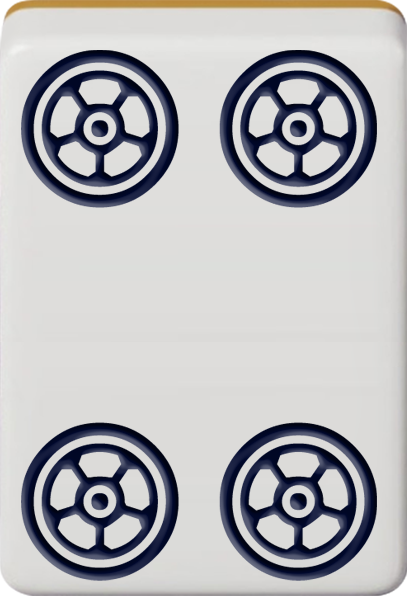
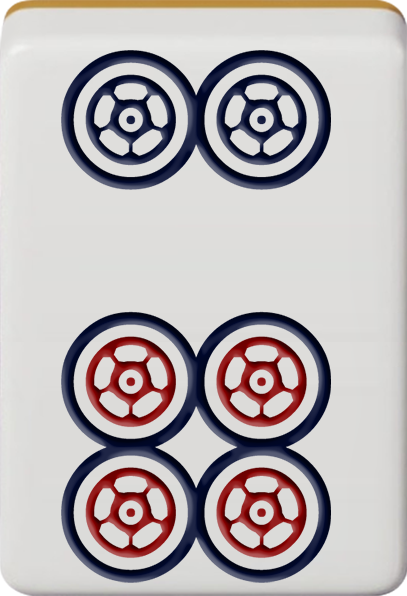
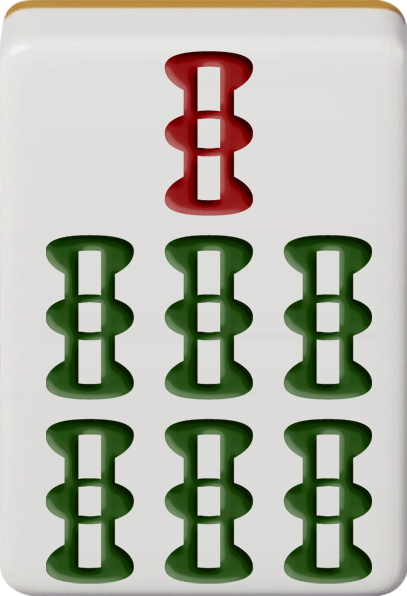
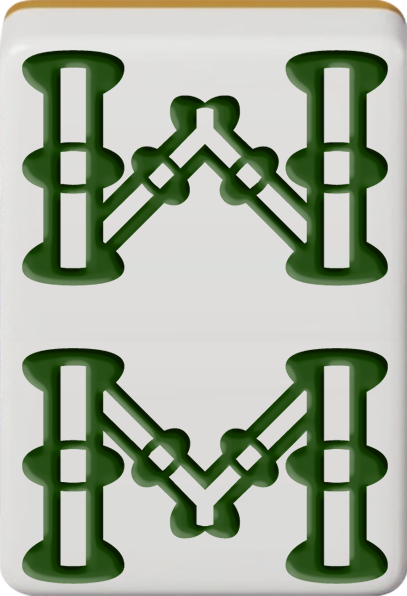
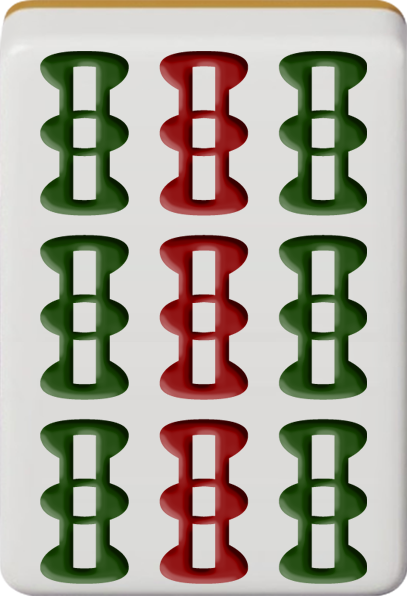 plus three white dragons and a
 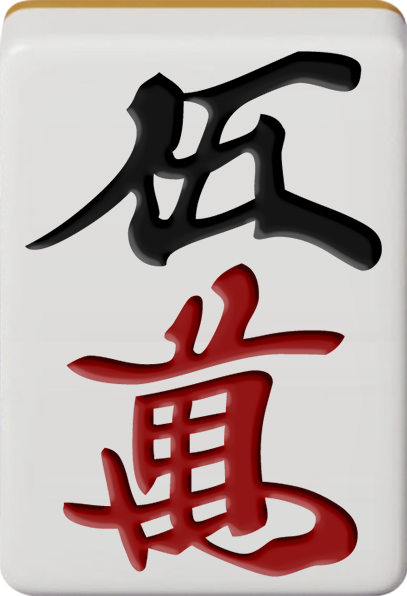 pair completes four sets and a pair. A hand must also contain at least one yaku (a scoring pattern).
How a turn works
On each turn you draw one tile and discard one, keeping 13 tiles in hand. You repeat this, shaping your hand toward a win. Which tile you discard is the decision that wins or loses the game.Practice in the app
A "what would you discard?" (何切る) puzzle asks which tile is best to throw in a real situation. The app lets you practice these with instant explanations and track your progress.Download
Free on iOS and Android.
Coming soon
Try a real problem
Which tile would you discard? Practice these with instant explanations in the app.
Pick the tile you would discard.
Fu & Scoring
A hand’s value comes from han (yaku + dora) and fu. Add up the fu below, round up to the nearest 10, then combine with han.
① Base Fu
| Pattern | 2–8 | 1 / 9 | Honors |
|---|---|---|---|
| All wins | 20 |
② Win Type
| Pattern | 2–8 | 1 / 9 | Honors |
|---|---|---|---|
| Closed ron | +10 | ||
| Tsumo | +2 | ||
| Open ron | +0 |
③ Melds
Simples / Terminals / Honors
| Pattern | 2–8 | 1 / 9 | Honors |
|---|---|---|---|
| Sequence | 0 | 0 | 0 |
| Open pon | 2 | 4 | 4 |
| Closed pon | 4 | 8 | 8 |
| Open kan | 8 | 16 | 16 |
| Closed kan | 16 | 32 | 32 |
④ Pair (Jantai)
| Pattern | 2–8 | 1 / 9 | Honors |
|---|---|---|---|
| Simples / non-seat wind | 0 | ||
| Double wind | 2 or 4 | ||
| Seat/round wind | 2 | ||
| Dragon | 2 |
⑤ Wait Type
| Pattern | 2–8 | 1 / 9 | Honors |
|---|---|---|---|
| Two-sided wait | 0 | ||
| Dual-pair wait | 0 | ||
| Middle wait | 2 | ||
| Edge wait | 2 | ||
| Single tile wait | 2 |
Add up the fu, then round up to the nearest 10.
Points
Points come from han (yaku + dora) and fu. Each cell shows ron (top) and tsumo (below). Tsumo is written as “non-dealer–dealer”; a dealer’s tsumo is “each player”.
Non-dealer (子)
| Fu | 1 han | 2 han | 3 han | 4 han |
|---|---|---|---|---|
| 20 pinfu tsumo | — | 1,300 400-700 | 2,600 700-1300 | 5,200 1300-2600 |
| 25 chiitoitsu | — | 1,600 400-800 | 3,200 800-1600 | 6,400 1600-3200 |
| 30 | 1,000 300-500 | 2,000 500-1000 | 3,900 1000-2000 | 7,700 2000-3900 |
| 40 | 1,300 400-700 | 2,600 700-1300 | 5,200 1300-2600 | Mangan |
| 50 | 1,600 400-800 | 3,200 800-1600 | 6,400 1600-3200 | Mangan |
| 60 | 2,000 500-1000 | 3,900 1000-2000 | 7,700 2000-3900 | Mangan |
| 70 | 2,300 600-1200 | 4,500 1200-2300 | Mangan | Mangan |
| 80 | 2,600 700-1300 | 5,200 1300-2600 | Mangan | Mangan |
Dealer (親)
| Fu | 1 han | 2 han | 3 han | 4 han |
|---|---|---|---|---|
| 20 pinfu tsumo | — | 2,000 700 all | 3,900 1300 all | 7,700 2600 all |
| 25 chiitoitsu | — | 2,400 800 all | 4,800 1600 all | 9,600 3200 all |
| 30 | 1,500 500 all | 2,900 1000 all | 5,800 2000 all | 11,600 3900 all |
| 40 | 2,000 700 all | 3,900 1300 all | 7,700 2600 all | Mangan |
| 50 | 2,400 800 all | 4,800 1600 all | 9,600 3200 all | Mangan |
| 60 | 2,900 1000 all | 5,800 2000 all | 11,600 3900 all | Mangan |
| 70 | 3,400 1200 all | 6,800 2300 all | Mangan | Mangan |
| 80 | 3,900 1300 all | 7,700 2600 all | Mangan | Mangan |
Mangan and above
From mangan up, the payouts are fixed: (ron / tsumo)
Mangan (5 han)
- Non-dealer
- 8,000 / 2,000·4,000
- Dealer
- 12,000 / 4,000 all
Haneman (6–7)
- Non-dealer
- 12,000 / 3,000·6,000
- Dealer
- 18,000 / 6,000 all
Baiman (8–10)
- Non-dealer
- 16,000 / 4,000·8,000
- Dealer
- 24,000 / 8,000 all
Sanbaiman (11–12)
- Non-dealer
- 24,000 / 6,000·12,000
- Dealer
- 36,000 / 12,000 all
Yakuman (13+)
- Non-dealer
- 32,000 / 8,000·16,000
- Dealer
- 48,000 / 16,000 all
Glossary
A
- Added Kan (Kakan)
- A type of open kan formed by adding the fourth tile to an existing pon.
- Aida Yonken (Gap-Four Suji)
-
A term used in discard reading. For example, if the discards include
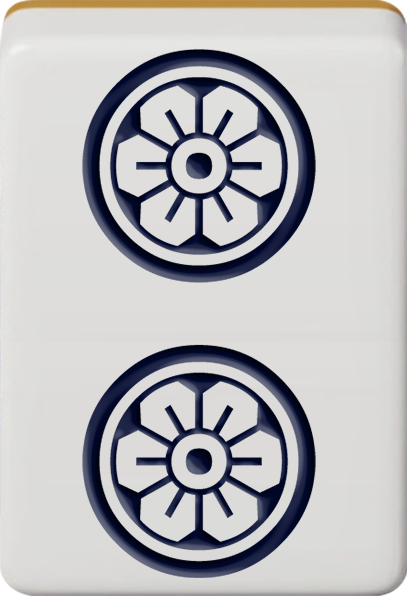 and
and 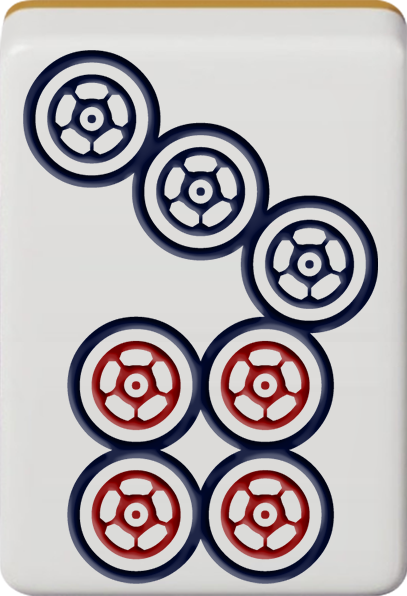 , the ura-suji of and the ura-suji of are both
 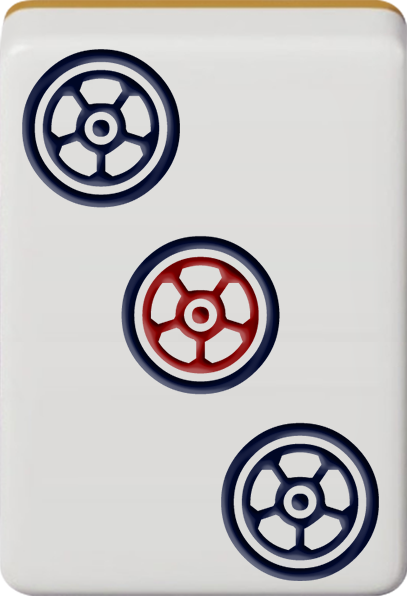 -, so this is a discard-reading technique that flags a - wait as dangerous. It's called this because four tiles — , , , and — are sandwiched between the and .
D
- Dead Wall
- The 14 tiles (7 tiles x 2 rows) left at the end of the wall.
F
- Final Shape (Saishuukei)
- A tenpai shape with no further improvement (henkei) possible.
N
- Nagashi Mangan
- Achieved when, at an exhaustive draw, all of a player's discards are terminal or honor tiles (1, 9, or honor tiles). It is often treated as a mangan-scoring winning hand.
R
- Ras (Last)
- From "last," meaning 4th place. When referring to a hand/round, South 4 is called "oorasu" and South 3 is called "ras-mae" (the hand before last).
T
- Tacha (Other Players)
- The three players other than yourself.
- Tile Efficiency (Haikouritsu)
- The skill of combining tiles efficiently. In this app, it refers to "the discard choice that is most advantageous with winning as the goal," whereas a choice that "simply has the most tiles" is treated not as "tile efficiency" but as "pai-ri" (raw efficiency).
W
- Wait
- The tile(s) you are waiting on while in tenpai.
Y
- Yaochuu Tiles
-
A collective term for honor tiles and terminal (1/9) tiles. Specifically the 13 types: ,
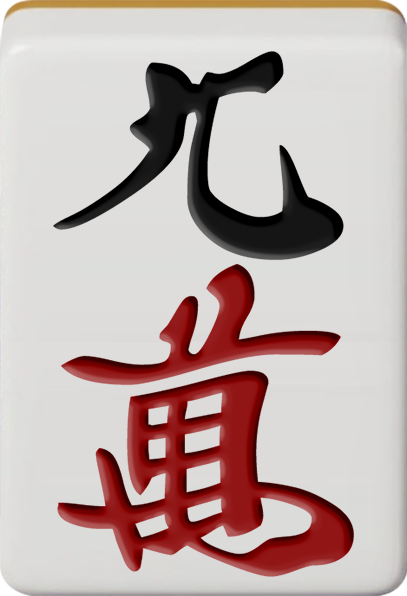 ,
,  ,
, 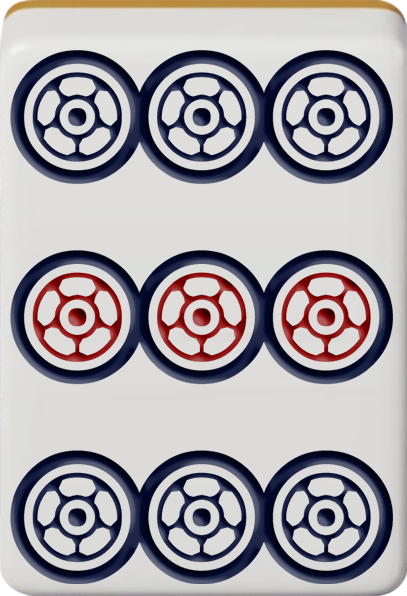 ,
, 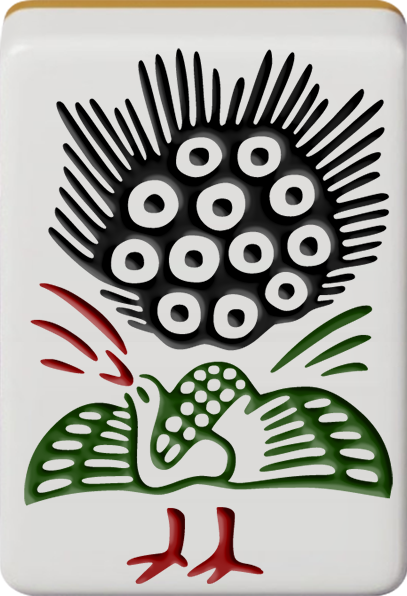 , ,
, , 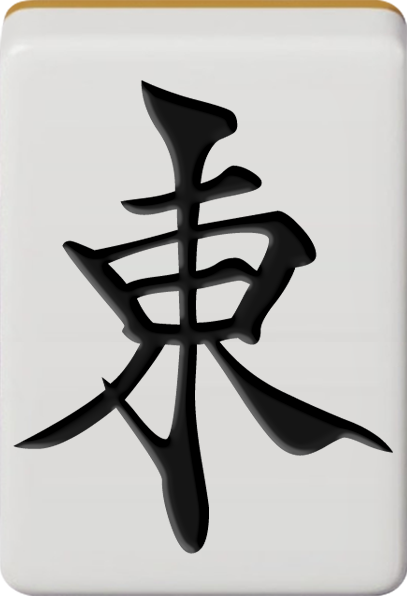 ,
, 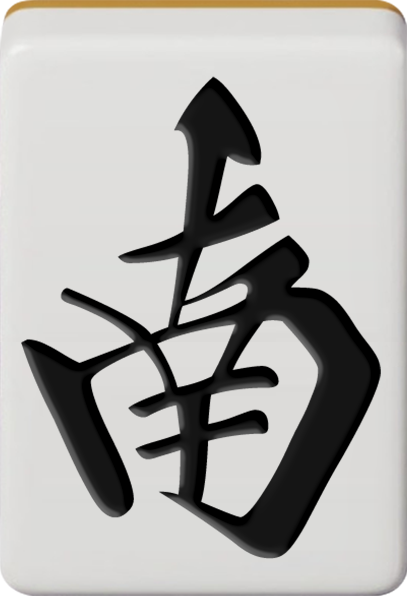 ,
, 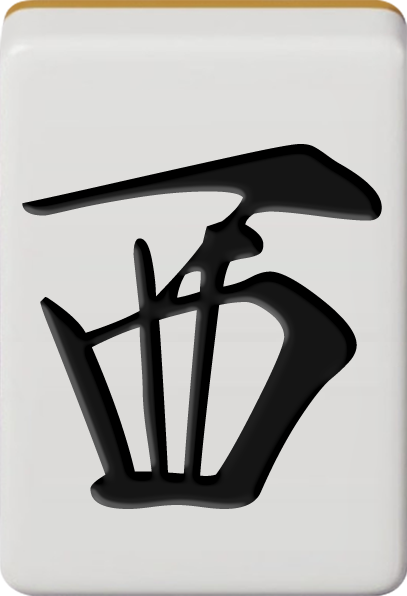 ,
, 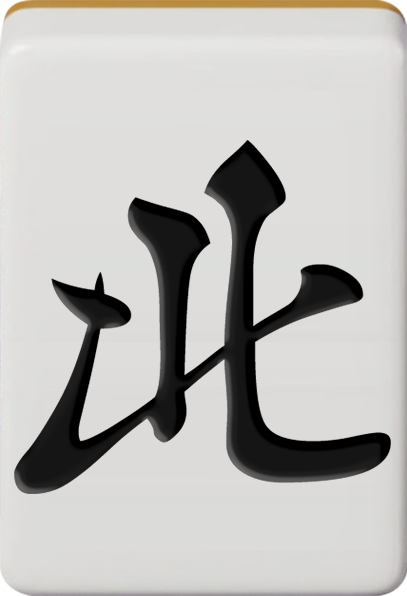 ,
,  ,
, 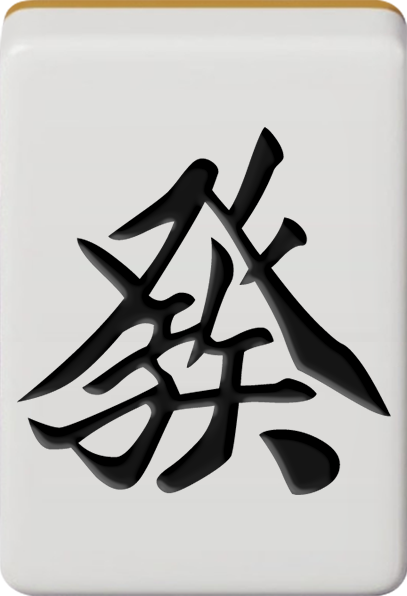 ,
, 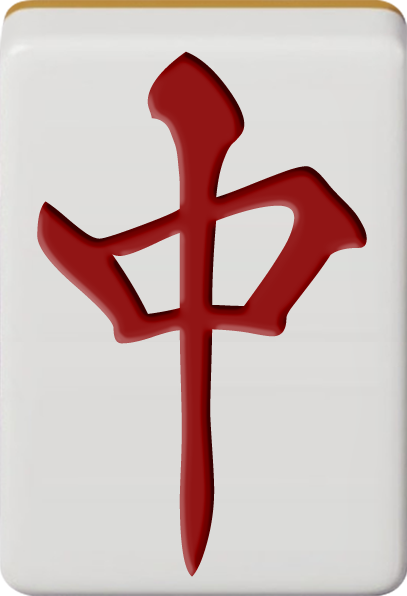 .
.
Download
Free on iOS and Android.
Coming soon